
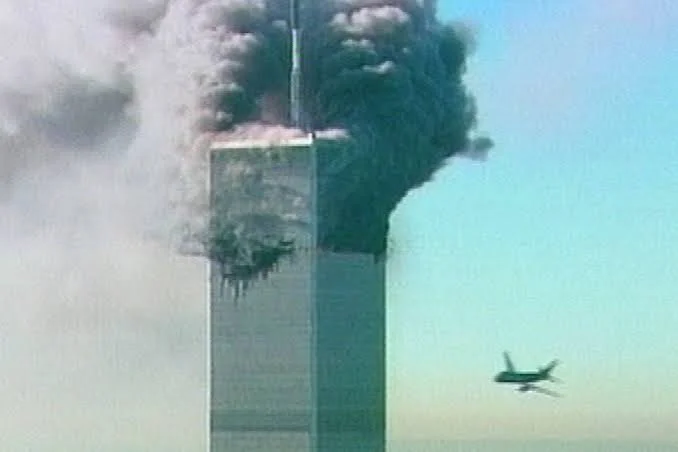
So, I remember when 9/11 occurred. Everyone here does, I guess. I was at work, and I had to send someone home because she started laughing hysterically, saying, “Oh, God…oh, God…we’re going to die.” Over and over. That was having quite the effect on everyone else, huddled around a computer, watching news reports. That was only the morning.
That evening, I was just driving around listening to NPR, trying to get a handle on what was happening, when I pulled into my usual gas station. It was closed. I didn’t find out until the next day that it was closed because the guy running it had been taken out and beaten up because he had dark skin and looked Arab. He was not; he was an Indian, a US citizen, third-generation. That day after, local talk radio was talking about this event as well as the broader events of the day before. The consensus seemed to be that this was the price you had to pay to be safe. Hurting innocent people was the price you had to pay for hurting innocent people. Or rather hurting your nation’s OWN innocent people was the price you had to pay because foreign entities hurt your nation’s own innocent people.
It was scary. I can’t even imagine how it felt up here, especially for those of you who were probably, at the time, living even closer to the city than you are now.
And I remember President George W. Bush at ground zero giving his rousing talk and I remember him later showing up for a ballgame. But what I remember most is this quote by the President: “The English translation is not as eloquent as the original Arabic, but let me quote from the Koran itself: ‘In the long run, evil in the extreme will be the end of those who do evil. For that they rejected the signs of Allah and held them up to ridicule.’"
This was not a statement of forgiveness. It was more prophetic than forgiving. The words are not particularly powerful or well-written. What makes them memorable is this: he said those words, invoking the Koran, at the Islamic Cultural Center in Washington, D.C. on September 17, 2001, less than a week after that attack. He spoke there because what the nation was approaching was not forgiveness, but the unforgiveable. We were about to start scapegoating people for their faith and their accents and their names and their skin tones. And what President Bush at that moment was set the conditions for the possibility of forgiveness. And we, most of us at least, walked away from the precipice.
See, Jesus today is telling us to be lavish with forgiveness, forgive seventy-seven times. That’s forgiveness to the nth degree right there. And he ties that command with a parable about a person who was forgiven for his poor business decisions which resulted in defaulting on a debt, but he wasn’t willing or able to find that same forgiveness when someone owed HIM a fraction of that amount. His heart was hardened and he simply could not or would not do the same thing. And it’s hard, especially when the stakes are even higher than a few denarii among friends.
When we talk about forgiveness, there’s a lot that comes together to make it such a weirdly compelling, graceful thing. But we also tend to think about it kinda wrong. You can ask for forgiveness all day long, and it’s great if you say you’re sorry and the person you wronged gives you a big ol’ hug. But what do you do when you’re the one wronged? What do you do when the wrong goes beyond lies or insults or even an altercation. Forgiving can be hard. For some it can seem impossible.
Look, we’re not talking about using forgiveness to get out of trouble so you can just cause the trouble again. Forgiveness is not an “If you love me, you’ll forgive me, and I’ll never hit you again, baby, I promise” situation where begging forgiveness is just a way to reset the clock. That’s emotional abuse and forgiveness doesn’t play a role in that.
But being harmed takes part of you away from you. But forgiving can be a way to take that part back. When we refuse to forgive, or just can’t bring ourselves to do it, the person who did us wrong stays on the top of our brains. Being wronged then becomes the focal point of our life, sometimes an obsession. We start to respond to everything from that place of hurt. And the one who hurt us maintains control. Whether we do what they want or swing clear in the other direction, we’re still responding to them.
Forgiveness refuses to let someone else’s hateful act influence what you do. To forgive requires nothing of anyone but you. And that means forgiveness frees you from someone else’s control, even if you haven’t seen them since that terrible day, even if they’re ten years in the grave, even if they sit across the kitchen table every morning. Even if we see their terrible acts on tv played out every year. It’s an enormous decision and it takes a lot of work, but it can happen entirely in the privacy of your own soul.
Over the last few weeks, we’ve heard the line “whatever you loose on earth, you loose in heaven” a couple times. It’s not easy, but you always have the power to set loose whatever it is you carry. There’s a million supposed reasons to keep that stuff bound (people in power and influence seem adept at holding on to grudges), but none of those reasons are worth it.
Today it’s seventy -even times, in another gospel it’s seventy times seven. But really it’s just endless. How often should we do this? Every single day. We can choose to hold on to the wrongs that bind us, or we can choose to let them flutter away. As the illustrious Jinkx Monsoon would say, it’s like water off a duck’s back.
Now, look, I’ve been hurt in some real ways, and I’ve heard some of y’all’s harrowing stories, too. I know what it’s like to hold on tight to being wronged. And I can’t even imagine considering forgiveness when I lost a loved one in the Twin Towers, or the Pentagon, or United Airlines Flight 93. And I want to be clear. Forgiving is not an endorsement of bad behavior. It’s not a pass from consequences. And it’s not an invitation to get hurt all over again. It's setting the conditions of possibility, a possibility where we can loose the stuff that seeps into our souls and eats at us. Forgiveness recognizes that someone did wrong, but it refuses to let their action rule you.
Forgiveness isn’t a free pass for them to take advantage of us. It’s a way of exercising real, gentle power. It’s a way of loving enemies who target us, of loving friends who stumble, of loving ourselves, something so often hard to do. And it’s a way of loving our neighbors. So, forgive and you will be set free. Loose your wrongs and your bindings will fall. Be generous with your love, and you will know the grace of God.
In our Old Testament reading it took Joseph and his brothers a lifetime to get to that forgiveness. And if that’s what it takes that’s what it takes, but the journey to that place starts now. The conditions for the possibility for forgiveness have been set now. It starts with a savior who forgave his killers while hanging on a cross. It starts with Jesus. For all of us, no matter what it is, it seems that it always starts with Jesus.